
El Jardin de Edgar
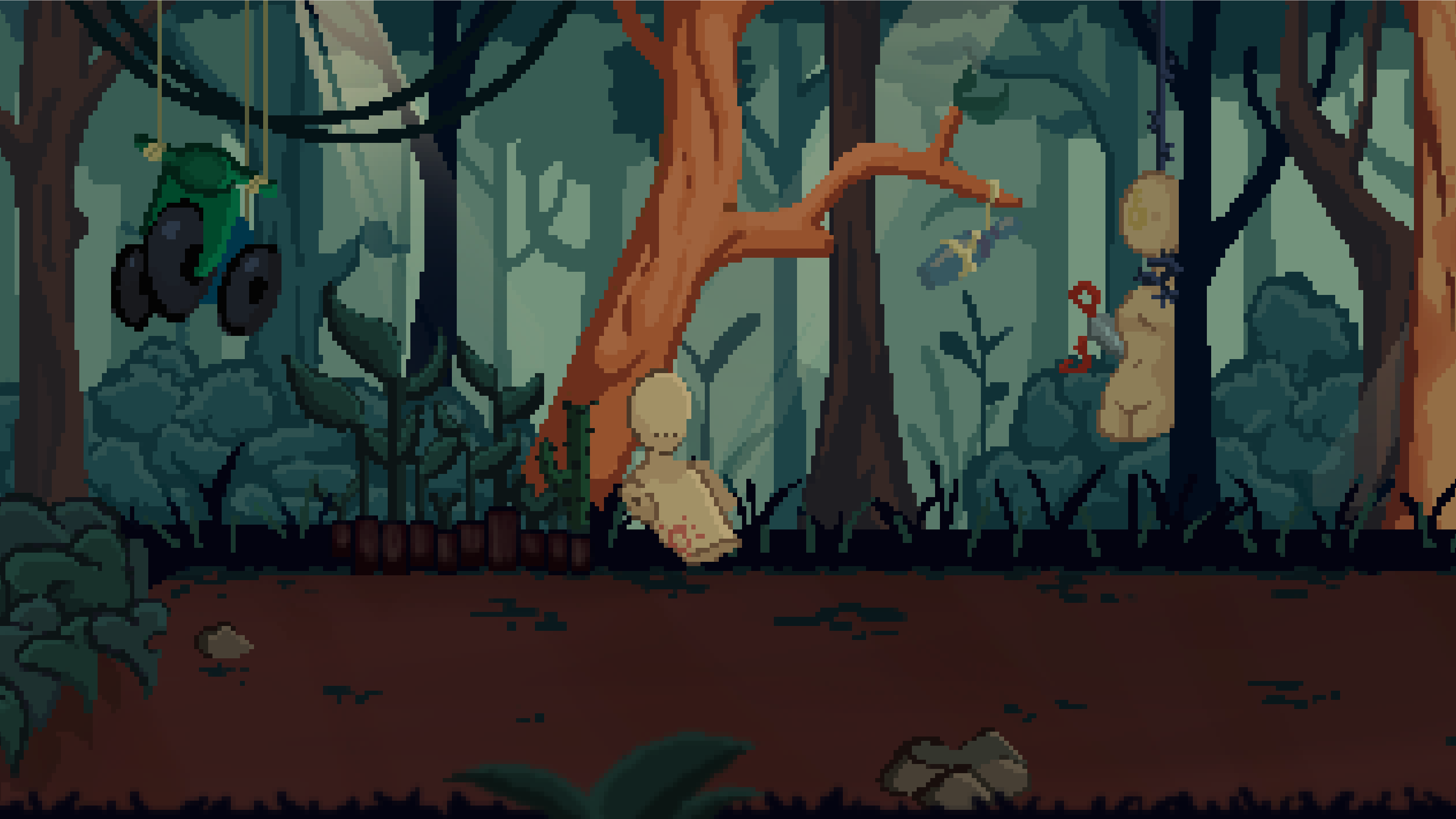
El Jardin de Edgar is a narrative Point-and-Click game inspired by the literature of Edgar Allan Poe, currently only available in Spanish. The project was selected to be showcased at the 22nd Festival Internacional de la Imagen in 2023, in Manizales, Colombia.
Tools
Unity 2D 🔹 C# 🔹 Fungus
Role
Lead Developer 🔹 Sound Designer 🔹 Narrative Designer
The Gameplay
El Jardin de Edgar is a 2D narrative exploration game with a playtime of approximately 30–40 minutes, developed in Unity. Inspired by the works of Edgar Allan Poe, its visual, sound, and narrative design aim to create a mysterious atmosphere that stays with the player throughout the experience.
The gameplay is based on classic Point-and-Click mechanics such as item collection, crafting, and contextual interaction with the environment. These mechanics allow for smooth navigation through the game world, encouraging discovery and experimentation. The design focuses on enabling natural moments of deduction and problem-solving, avoiding forced or arbitrary solutions.
In terms of structure and experience, El Jardin de Edgar draws direct inspiration from titles like The Last Door by The Game Kitchen, adopting a similar approach to progressive, symbol-laden storytelling. As in The Last Door, Poe’s influence is not only aesthetic but also tonal, with references to short stories such as The Gold-Bug, The Imp of the Perverse, The Black Cat, The Pit and the Pendulum, and The Tell-Tale Heart.
This approach is meant not only to pay homage to Poe’s work, but also to immerse the player in a coherent and evocative universe that blends literature with interactivity.
Visual Scripting with Fungus
El Jardin de Edgar was the first video game I ever developed. At the time, I had limited experience with C#, so I chose a hybrid approach that combined the best of both worlds: traditional development using C# scripts and Unity components, alongside the implementation of narrative systems through Fungus, a free and open-source package designed specifically for creating narrative-driven interactive experiences.
This combination allowed me to focus on designing the narrative flow, event progression, and player choices, without compromising core gameplay features such as navigation, inventory management, and environmental interaction. Fungus proved to be a valuable tool for visually structuring dialogues and scenes.
A* Pathfinding Project
Character movement is one of the core elements in a Point-and-Click game, as it defines how smoothly the player navigates the world and perceives interactions. Instead of using Unity’s built-in NavMesh system, I chose to integrate the A* Pathfinding Project, a more flexible and precise solution for the needs of this project.
This decision allowed me to implement a more refined navigation system, enabling the character to avoid obstacles and move naturally through complex environments. A* offered greater control over agent behavior and better adaptation to 2D spaces, which was essential to deliver a smooth and frustration-free exploration experience.
Camera and Visual Narrative with Cinemachine
Instead of using Unity’s default camera, I implemented Cinemachine to manage camera composition and movement within the game. This tool enabled me to create smooth scene transitions, dynamic framing, and tracking effects that enhance visual clarity and reinforce the narrative.
Thanks to Cinemachine, it was possible to direct the player’s attention at key moments, highlight important environmental elements, and present narrative events in a more cinematic and polished way. The result is a more professional staging that aligns with the game’s tone and literary inspiration.
